
Student Name
Capella University
NURS-FPX6424 Data Mining to Advance Healthcare
Professor Name
Submission Date
Tool Kit for Critical Analysis of System Vulnerabilities, Data Validity Management, and System Analysis
An audit of potential system vulnerabilities of the medical-surgical unit (MSU) with 40 beds showed significant shortcomings in compliance with CDSS. It did not perform medication reconciliation, and the nurse was not well-versed in electronic health records. This toolkit includes evidence-based policies, guidelines, and actionable recommendations to address these vulnerabilities and enhance health informatics data to improve patient safety outcomes.
Evidence-Based Policy
The person who is responsible for complying with this policy is all (RN, charge RN, pharmacists, unit managers) registered nurses, charge nurses, pharmacists, and unit managers on the 40-bed medical-surgical unit. All staff will investigate all CDSS alerts, carry out medication reconciliation at each patient change of care, and report all of the near misses within 24 hours of occurrence. All told, these activities will help to reduce the number of medication-related errors if they are consistently carried out across all health care professions. At the start of January 2026, the medical-surgical unit had a rate of 8.2 errors for every 1,000 doses, had 54% compliance with the CDSS alerts, and had a total of 12 near-misses during the calendar month (January). The specific outcomes that will be measured for this policy are: error rates of ≤5.0, compliance with CDSS and medication reconciliation procedure ≥90%, no more than 4 near-misses reported per month, and nurses gaining their EHR competency level of ≥85%, which is based on the TIGER framework. All data gathered under this policy by the law is protected under HIPAA (Health Insurance Portability and Accountability Act) and can only be accessed by those with authorization. The Joint Commission NPSG 03.06.01 requires that nurses complete a medication reconciliation at each “transition of care. Medication reconciliation must be documented by the nurse at each “transition of care” per the Joint Commission NPSG 03.06.01. Nurses will be accountable for not properly completing this medication reconciliation or documenting an override of an alert by CDSS. As a consequence, data about students’ IQ collected under this policy will be used solely to inform quality improvement processes.
Guidelines for Applying the Policy in Practice
Within 15 minutes of an alert override/overrides the Registered Nurse is required to document their clinical reasoning about the override(s) in the CDSS. Staff will be required to have a 48-hour learning session if there is a shift that is more than a 30% override. At the end of each shift, charge nurses will discuss and record any override(s) that occurred during their shift with their unit manager. The medication reconciliation process must be performed at patient admission, discharge, and transfers, and it is built right into the workflow of the electronic health record (EHR) so that it is a required task for all staff to perform. Medication reconciliation is done within 2 hours of admission to the facility to check the accuracy of medications in the pharmacy. Any discrepancies will have to be resolved prior to giving a medication.
Any event that is a near-miss medication is to be reported via the hazard reporting system within 24 hours. The average of unit near misses will be calculated monthly by the charge nurses, who will summarise this to the unit manager by the third business day of the next month. The unit manager, charge nurses, and pharmacists’ safety dashboard review meeting is held on the first Monday of every month to review how they are doing in relation to the service-wide benchmarks: number of medication errors, CDSS compliance, CDSS reconciliation completeness, near misses, competency of staff in using EHR, and CDSS override percentage. If an organisation does not meet any of its benchmarks, then action plans need to be created and put into place within 72 hours.
Practical Recommendations
All registered nurses need to attend a required orientation of two hours that includes active involvement in hands-on activities using an electronic health record (EHR) and procedures and policies for reconciliation and CDSS. Tip sheets defining end-user questions about EHRs are readily available in the nursing station, and quarterly, through team manager reviews, data is gathered from each unit to assess trends and outcomes. In addition to this information from these reviews, the units have 15 minutes each month for a safety huddle, which is completed during shift changes, whereby the units can discuss a few key performance indicators (KPIs). It outlines ways in which improvement could be achieved, and communicates any changes in protocol, ensuring that no time is lost and that all staff are aligned and accountable.
The data monitoring is in four levels. Nurse staff supervisors will audit medication administration record (MAR) overrides on an ongoing, nightly basis and will immediately re-educate anyone who has exceeded the 30% override rate for administering medication. Once a month, the unit will consider how it is doing on each of the 6 metrics in its safety dashboard review meeting (SDRM) and reflect on these metrics in relation to the benchmark. The unit will have a policy review quarterly, to confirm the metrics and discuss any vulnerabilities that may have occurred. Unit data will be compared with the national data on an annual basis to assess the need for any changes in policy and/or EHRs.
Specific Example: Medication Safety Initiative on the 40-Bed Medical-Surgical Unit
There were three issues found in the EHR during an audit report in January 2026; they were related to an audit trail and dispensing from the EHR by a pharmacy. They were also much higher than the 30% Joint Commission’s benchmark, with an alert override percentage of 38%, lower than the benchmark on completing medication reconciliation processes with 61% (below the 90% completion rate expected by Joint Commission), and the lower than expected 48% of nurses who completed competency training with EHR. During the one-month period, there were two issues that led to an error rate of 8.20/1000 doses, and 12 near misses were recorded (Tan et al., 2024). All metrics were calculated using system-generated data, so it was not possible to see if the data was inaccurate or not, due to the care not being reported as it occurred.
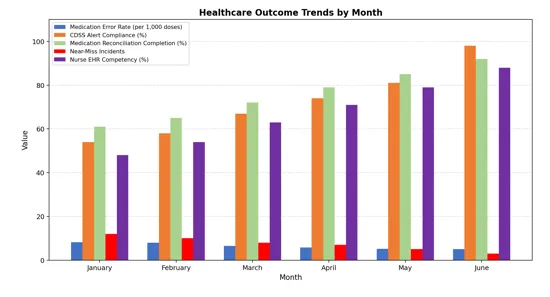
Table 1: Healthcare Outcome Trends by Month (January–June 2026)
|
Month |
Error Rate (per 1,000) |
CDSS Compliance (%) |
Med Rec Completion (%) |
Near-Miss Incidents |
EHR Competency (%) |
|
January |
8.2 |
54 |
61 |
12 |
48 |
|
February |
7.9 |
58 |
65 |
10 |
54 |
|
March |
6.5 |
67 |
72 |
8 |
63 |
|
April |
5.8 |
74 |
79 |
7 |
71 |
|
May |
5.1 |
81 |
85 |
5 |
79 |
|
June |
5.0 |
98 |
92 |
3 |
88 |
Table 1 displays the trends in health services outcomes per month (January – June 2026).
The sample data is provided to illustrate how different months and error rates compare for each state. The sample data is used herein for illustrative purposes to compare error rates and CDSS compliance rates (as a percent) by month and state.
Legal and Ethical Ramifications
This policy will ensure that all information within a patient’s EHRs will adhere to HIPAA guidelines, be de-identified before being used, and only be accessible to authorized staff during safety meetings. Any data collected with integrity, data stored securely, and kept for at least three years is considered the data accountability of the unit manager. Likewise, JCAHO has mandated more documentation around medication reconciliation during every shift of a patient’s care (NPSG 03.06.01), and not meeting this requirement or documenting an override in the CDSS will leave the nurse as well as the institution liable.
Executive Summary
Together, these three identified gaps led to a national Institute for Safe Medication Practices (ISMP) error rate of 8.2 errors/1000 doses, an error rate greater than 62% of the ISMP national average, and 12 near misses over the course of 1 month. Due to this, this toolkit has been adopted, which includes: Mandated clinical rationale to be documented when bypassing CDSS alerts: Reconciliation – must not be bypassable on EHR workflow: 48-hour re-education for nurses when alerts are being overridden > 30% nightly; A monthly safety dashboard review with six key metrics and comparison against benchmarks.
Significant improvements have been found in all three key areas over 6 months. There were no medication errors, CDSS rate was at 98%, which is the ISMP benchmark, medication reconciliation was completed at 92% (Joint Commission requirement), there were no near misses between 12 and 3, and nursing competency with EHR was at 88% (the ISMP targets the TIGER benchmark of 85%). This data, together with ongoing monitoring, shows that vulnerability assessment in combination with ongoing monitoring leads to sustainable patient safety improvement. Leadership is encouraged to use the toolkit in any medical-surgical unit and continue to support nursing education on EHR and undertake regular (quarterly) evaluations of exposure to EHR to find new vulnerabilities.
References
Abdelrahman, M. M., Hashem, R., El‐boudy, D. F., & Elsehrawy, M. G. (2026). Enhancing nurses’ handoff practices through simulation‐based I‐ pass training: An evidence‐based study. Journal of Clinical Nursing. https://doi.org/10.1111/jocn.70310
Alrasheeday, A. M., Alshammari, B., Alkubati, S. A., Pasay-an, E., Albloushi, M., & Alshammari, A. M. (2023). Nurses’ attitudes and factors affecting use of electronic health record in saudi arabia. Healthcare, 11(17), 2393. https://doi.org/10.3390/healthcare11172393
Armando, L. G., Miglio, G., de Cosmo, P., & Cena, C. (2023). Clinical decision support systems to improve drug prescription and therapy optimisation in clinical practice: A scoping review. British Medical Journal Health & Care Informatics, 30(1), e100683. https://doi.org/10.1136/bmjhci-2022-100683
Bronstein, S. (2025). Using shared clinical decision support to reduce adverse drug events and improve patient safety. Frontiers in Digital Health, 7. https://doi.org/10.3389/fdgth.2025.1703141
Dahmke, H., Cabrera-Diaz, F., Heizmann, M., Stoop, S., Schuetz, P., Fiumefreddo, R., & Zaugg, C. (2024). Development and validation of a clinical decision support system to prevent anticoagulant duplications. International Journal of Medical Informatics, 187, 105446. https://doi.org/10.1016/j.ijmedinf.2024.105446
Jošt, M., Knez, L., Mrhar, A., & Kerec Kos, M. (2021). Adverse drug events during transitions of care. Wiener Klinische Wochenschrift, 134, 130–138. https://doi.org/10.1007/s00508-021-01972-2
Kamalzadeh, H., Mastaneh, Z., & Abedini, S. (2025). Navigating ethics: Nurses’ experiences with hospital information systems in the digital age. Nursing Ethics, 33(2), 400–412. https://doi.org/10.1177/09697330251385030
Kutá, D., & Faltejsek, M. (2025). The role of artificial intelligence in the transformation of the BIM environment: Current state and future trends. Applied Sciences, 15(18), 9956–9956. https://doi.org/10.3390/app15189956
Oufkir, L., & Oufkir, A. A. (2023). Understanding EHR current status and challenges to a nationwide electronic health records implementation in Morocco. Informatics in Medicine Unlocked, 42, 101346. https://doi.org/10.1016/j.imu.2023.101346
Reale, C., Salwei, M. E., Militello, L. G., Weinger, M. B., Burden, A., Sushereba, C., Torsher, L. C., Andreae, M. H., Gaba, D. M., McIvor, W. R., Banerjee, A., Slagle, J., & Anders, S. (2023). Decision-Making during high-risk events: A systematic literature review. Journal of Cognitive Engineering and Decision Making, 17(2), 188–212. https://doi.org/10.1177/15553434221147415
Redley, B., Douglas, T., Hoon, L., White, K., & Hutchinson, A. (2022). Nursing guidelines for comprehensive harm prevention strategies for adult patients in acute hospitals: An integrative review and synthesis. International Journal of Nursing Studies, 127(104178), 104178. https://doi.org/10.1016/j.ijnurstu.2022.104178
Smit, C., & Peddle, M. (2025). Experiences and perceptions of registered nurses who work in acute care regarding incident reporting: A scoping review. Healthcare, 13(11), 1250. https://doi.org/10.3390/healthcare13111250
Tan, X., Suo, X., Li, W., Bi, L., & Yao, F. (2024). Data visualization in healthcare and medicine: a survey. The Visual Computer, 41, 3037–3058. https://doi.org/10.1007/s00371-024-03586-x
Van-De-Sijpe, G., Quintens, C., Walgraeve, K., Van Laer, E., Penny, J., De Vlieger, G., Schrijvers, R., De Munter, P., Foulon, V., Casteels, M., Van der Linden, L., & Spriet, I. (2022). Overall performance of a drug–drug interaction clinical decision support system: quantitative evaluation and end-user survey. BMC Medical Informatics and Decision Making, 22(1). https://doi.org/10.1186/s12911-022-01783-z